
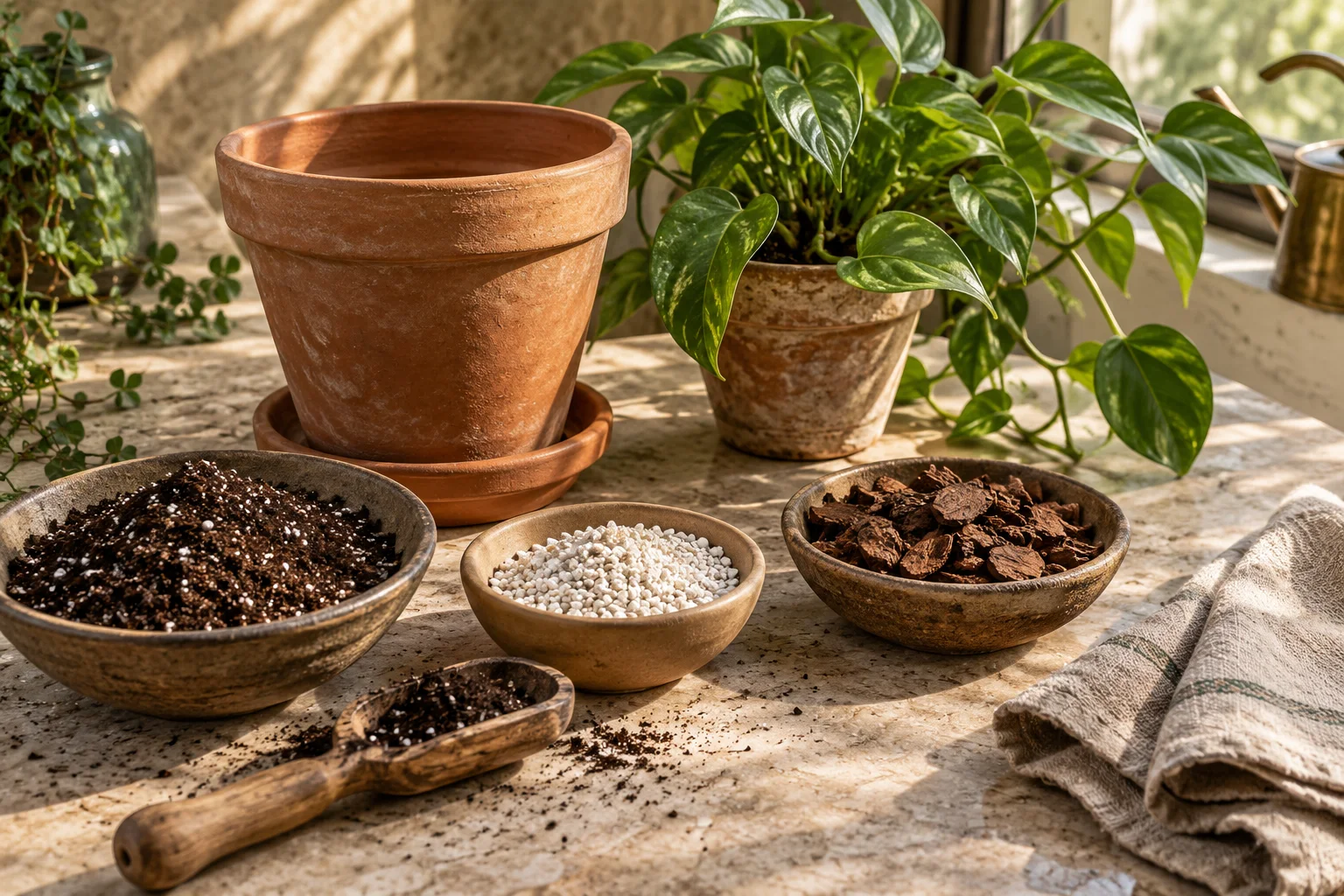
First, check the roots and the conditions.
Repotting is worth considering when roots have filled the container or the mix no longer performs well. Slow growth and yellowing can also have other causes, including unsuitable light or watering. A bigger container is not automatically the answer.
Prepare before you begin.
- Check the plant’s individual care needs and choose an appropriate container with drainage holes.
- Measure the inside of the new pot. Allow space below the rim for watering, and estimate the volume occupied by the existing root ball.
- Use a suitable container potting mix. Garden soil can behave very differently in a pot. Follow ingredient and product handling instructions, and avoid breathing dust.
- Remove the plant gently, inspect its roots and place it at an appropriate depth. Fill around it without treating the calculated volume as a quantity you must force into the pot.
- Follow the plant’s moisture needs, let excess water drain and record the changes. Observe its response instead of setting an automatic watering timetable.
Make the next time easier.
Record the date, the pot size, the mix you used and anything you noticed about the roots. A personal check-in date helps you remember to look; it doesn’t mean the plant needs water that day.
Read the horticultural guidance
This guide is a general summary; species-specific guidance takes priority. Reviewed 4 October 2026.